The theory of Bethany goes something like this: there are a lot of different diets that can help a person, depending upon the condition. I have a hard time making a cut and dry conclusion, because I think there is alot of truth in alot of different literature. It boils down to--what is the ailment? Everybody's body is different, our genes are different, and therefore, it is fair to say that a one-sized-fits all approach is not neccessarily ideal. (Everyone should be vegetarian or Everyone should be keto, etc.) Nah, I don't buy that. Plus, the way we methylate is different for some people (MTFHR) and so processing folate affect ones' mental and physical health. (detox system, etc.) We are all prone to a different health conditions, so why not study the condition that you are most effects you?
Also, I am fully aware that no one likes to be "told what to do." When someone is suffering, the last thing you want to do is to say to that greiving person, "Gee, you know, you really should try X, Y or Z to fix your problem." The first thing they need in empathy, a good listener and love, no mattter what the problem or condition is. I know, on more occasions than one, I have been a guilty "fixer" or giving "suggestions" although with good intentions.
So, I thought I would just put this stuff out there into the blogging world. If we want to get information, what do you do? You ask.
So, here you go. By virtue of you coming to my blog, you are, in a sense, asking what I know and I am freely and fully sharing. You are more than welcome to reach out to me, leave a comment, and I will gladly direct you to any other resources that I might be aware of. Happy learning!
So, here you go. By virtue of you coming to my blog, you are, in a sense, asking what I know and I am freely and fully sharing. You are more than welcome to reach out to me, leave a comment, and I will gladly direct you to any other resources that I might be aware of. Happy learning!
If someone had heart disease, I would look into a plant-based, vegetarian diet.
Please watch the Netflix movie, "Forks Over Knives."

Also, you might want to look into Dr. Gundry talking about lectins and power of polyphenols.
He has alot of information published about heart disease.
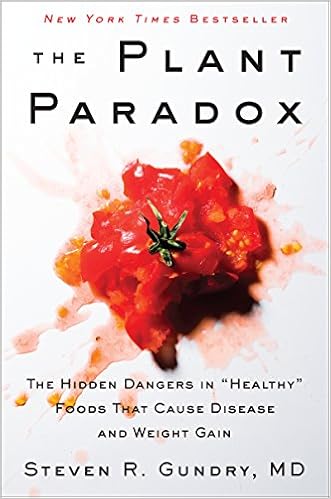
The information might seem to counter each other. One advocates plant-based, no meat. The other advocates no plant-lectins, and yes to grass fed, free range meats. I'll let you learn about it. :) But, just so you know, I have read how instapots can help to eliminate plant lectins, from the steaming and heating process. I found that fascinating.
He has alot of information published about heart disease.
The information might seem to counter each other. One advocates plant-based, no meat. The other advocates no plant-lectins, and yes to grass fed, free range meats. I'll let you learn about it. :) But, just so you know, I have read how instapots can help to eliminate plant lectins, from the steaming and heating process. I found that fascinating.
From cancer, I would look into the Series Called The Truth about Cancer. (I'm not saying don't see an oncologist. I'm just saying, here are some other alternative things,in addition, could they be helpful to you)
I think I would either go vegan, do the Gerson Therapy, or maybe even Ketogenic, and argue that might be helpful in dealing with Cancer. Vegan is a detoxing and cleansing diet. Protein, meat, is a building diet. (Think Body builders, they eat lots of meat and protein isolate foods, so that way they can build the muscles. But do you really want to be giving the cancer extra amino acids to survive and grow?) The other theory with Keto, in a nutshell, is that cancer loves sugar. It thrives on sugar. So, if you cut out virutally all carbs, would that, could that, help the cancer to not grow and to not spread?
I think I would either go vegan, do the Gerson Therapy, or maybe even Ketogenic, and argue that might be helpful in dealing with Cancer. Vegan is a detoxing and cleansing diet. Protein, meat, is a building diet. (Think Body builders, they eat lots of meat and protein isolate foods, so that way they can build the muscles. But do you really want to be giving the cancer extra amino acids to survive and grow?) The other theory with Keto, in a nutshell, is that cancer loves sugar. It thrives on sugar. So, if you cut out virutally all carbs, would that, could that, help the cancer to not grow and to not spread?
If someone had an autistic/dyslexic child, I would suggest more of a G.A.P.s diet style or specific carbohydrate way of eating. GAPS is an acronym for Gut and Psychology Syndrome.
It's a focus on healthy fats, meats, and nutrient dense bone broth. Essential Fatty Acids are really critical to anyone with any sort of mental inflammation. Whether it's autism, ADHD, depression--our brains need the fats to bring down inflamation and to function properly.
Honestly, if I had an ASD kiddo, I think paleo is probably more doable and is very similar to Full Gaps. I don't think I could do bone broth with a picky eater kiddo. (And boy, are they picky sometimes!) At very least, GF/CF (gluten free/ casein free) is better then nothing. Why? Wheat and Dairy both can cross the blood-brain barrier and increases neuro-inflammation.
If you want more of a sciency feel for why being GF would be good for any mental malady, I highly suggest reading this book, Grain Brain.

I realize this isn't about diet, but recently, I have come across the Nemecheck protocall for kiddos on the ASD spectrum. My functional doctor suggested I look into it for my gastroperesis. It's about stimuating the vagus nervee (for adults) and bringing down brain inflammation. Looks like there have several success stories of kiddos being able to speak again. He is so bold to suggest that his protocall of essntial fatty acids, is all you need, and you don't need to be GF/DF.
Our family is Gluten free dairy free because mold illness is an inflamatory illness, and those are the most immatory foods that we react to. We figured it out before knowing why, and then after getting the mold diagnosis, it all made sense. (Because the first thing the doctor will tell you to do, as a mold patient is to go gluten free... but we already did!)
Consistent battle with inflammation or autoimmune? I would suggest paleo as well. Or, at very least Gluten free/Dairy free. Check for nightshades.
First of all, eliminating anti-inflammatory foods-- like wheat, dairy, soy, corn, peanuts, ALSO unsoaked beans, unsoaked grains, unsoaked nuts.
Why? The phytic acid in the unsoaked grains/legumes take away the building blocks, minerals and vitamins, for neurotransmitters. (But if they were soaked, you wouldn't necessarily have to eliminate complete food groups.)
I realize this isn't about diet, but recently, I have come across the Nemecheck protocall for kiddos on the ASD spectrum. My functional doctor suggested I look into it for my gastroperesis. It's about stimuating the vagus nervee (for adults) and bringing down brain inflammation. Looks like there have several success stories of kiddos being able to speak again. He is so bold to suggest that his protocall of essntial fatty acids, is all you need, and you don't need to be GF/DF.
Our family is Gluten free dairy free because mold illness is an inflamatory illness, and those are the most immatory foods that we react to. We figured it out before knowing why, and then after getting the mold diagnosis, it all made sense. (Because the first thing the doctor will tell you to do, as a mold patient is to go gluten free... but we already did!)
Consistent battle with inflammation or autoimmune? I would suggest paleo as well. Or, at very least Gluten free/Dairy free. Check for nightshades.
First of all, eliminating anti-inflammatory foods-- like wheat, dairy, soy, corn, peanuts, ALSO unsoaked beans, unsoaked grains, unsoaked nuts.
Why? The phytic acid in the unsoaked grains/legumes take away the building blocks, minerals and vitamins, for neurotransmitters. (But if they were soaked, you wouldn't necessarily have to eliminate complete food groups.)
Also worth noting--cooking grains and and beans in the instapot destroys anti-nutrients. (ie Lectins or phytic acid).
There could be a link between lectins and arthritis.
Personal note: the inflammatory foods which paleo cuts out, (wheat, dairy, peanuts) if I accidentally eat them, I have debilitating rheumatoid arthritis-like symptoms. Maybe that's just me, but if someone has debilitating joint pain, I would definitely suggest eliminating wheat and dairy and seeing where it goes.
Want to Lose weight? I would endorse either Bright Line Eating OR Joel Fuhrman Eat To Live. (which is more vegetarian style). Check out the Amazon Reviews on each books. Both have had high success rates. I like the blood sugar control mentioned in BLE, cutting out flour and sugar. It makes a lot of sense. And Eat to Live, the highlight and take away for me was nutrient density of foods.
Want to Lose weight? I would endorse either Bright Line Eating OR Joel Fuhrman Eat To Live. (which is more vegetarian style). Check out the Amazon Reviews on each books. Both have had high success rates. I like the blood sugar control mentioned in BLE, cutting out flour and sugar. It makes a lot of sense. And Eat to Live, the highlight and take away for me was nutrient density of foods.
BUT... Caveat right here. If you are prone to depression, I would not necessarily recommend Eat to Live.


It has been said once, "what is good for the heart is not good for the brain. What is good for the brain is not always necessarily good for the heart." (Dr. Albert Mensah, MD. Psychiatrist).
With all of the greens, lectins, phytic acid, folate inherent in a traditional vegetarian lifestyle, it can be tricky for someone struggling with mental health issues. Not for all, but for some.
Heartburn or IBS?
Please check out Fast Tract diet.


It was extremely helpful and prevented my IBS flares much more effectively than FODMAP. FODMAP is usually suggested by the GIs. Fast Tract diet calculates the fermentation potential of foods, how long it takes to go through the digestive system, and uses a simple mathematical formula which calculates the glycemic index, carbs and fiber, and therefore how long the food will stay in your system. The longer the food stays, the more uncomfortable an IBS patient would be. It is dependable science to prevent the horrible pregnant-sized, uncomfortable bloating that I inevitably experienced if/when I was not careful. Instead of simply low-Fodmap, which is not all together bad, I would highly suggest checking out one of Norm Robillard's books, "Fast Tract digestion." (Heart burn or IBS)
Also worth mentioning if you have SIBO, the elemental diet also proved helpful for me. Google "Dr. Siebecker, Elemental Diet." Basically, it's eating feeding tube materal, and not giving the bacteria any change to live or thrive. They die off. It was more effective than antibiotics and prokinetics. (Which I did several times over, without success.). Elemental diet, although not fun or easy, really helped met overcome SIBO!
Struggle with MS? Chronic Fatigue? I would look into Dr. Terry Wahls story. Amazing-out-of-the-wheel-chair stories. I love how she uses the science of food, and all the anti-oxidants, nutrients, to prevent further aging.

Here is a 17 minute TEDx talk and YouTube Clip with Dr. Wahls telling her out-of-the-wheel-chair story-with-diet, when all other medicine failed her.
https://www.youtube.com/watch?v=KLjgBLwH3Wc
In general, just "healthy eating" in general, this book, The Maker's Diet is chalk full of sound guidelines, if you are already healthy to begin with. Prevent disease before it strikes! Jordan Rubin had an extreme case of Crohn's disease and went to 80+ doctors, traditional/western and alternative medicine. Ultimately, It was his diet that made the difference and brought him back to life. This book really resonated with me. It's not terribly extreme and just teaches sound pronciples.
Ketogenic diet. I would recommend this for someone who struggles with severe neurological issues. Ie Epilepsy, seizures, ALS, Alzheimer's, bipolar disorder, Parkinsons disease, to name a few. The keto diet was formed in the 1920s by a doctor at John Hopkins and it proved helpful for children with seizures. The essence of the diet is using ketones for fuel instead of glucose. It is still efficacious 100 years later. Would I recommend this for everyone? No, not neccessarily. Someone with a brain disorder that is hard to treat with medicine? Yes. And, I would throw in there, I believe that the keto diet is less efficacious when it includes dairy and wheat. (Wheat and dairy are inflammogens)
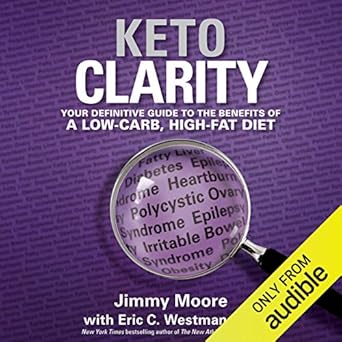
Check out this book Keto Clarity and also the movie, "Magic Pill" on Netflix. The magic pills just teaches how fats are essential nutrients for those with brain disorders.
Check out this book Keto Clarity and also the movie, "Magic Pill" on Netflix. The magic pills just teaches how fats are essential nutrients for those with brain disorders.
Whether we want to admit it or not: Food is very powerful! Food brought me back to life when medicine didn't. Trust me, I took every medication I was given; however, it was futile. (And then... in the rest of the story, I started recovery with foods, then meds and good doctors PLUS a pristine environment. I needed all of those things to ultimately helped me to become me again !)
However, if I decided to eat wheat or dairy or unsoaked/unsprouted grains, I seriously pay the consequences: I either have overwhelming fatigue, to the point I can't get off the couch OR my joints will suddenly feel like they are on fire or popping. (Can you tell I've accidentally found out these the hard way?)
If a teeny pill has so much effect on your body, think about the amount and types of food you are consuming, day-in and day-out. Are they good habits? Are they living foods to promote a living body? However, and unfortunately habits can be hard to change. I feel like food is sacred to most people. It's almost like their religion: it's tied to family traditions, holidays, and comfort. And most people don't really want to change from the lifestyle they grew up with. But, if you are willing to change and to learn... there's more out there that could help you with whatever ailment you are struggling with. Also, I'm not claming these diets are cure-alls; rather, they are a tool and sort of a crutch to help your illness be less-debilitating.
So.. I guess I just rest my case: rather than saying one blanket, and one-size-fits-all diet-- I'll just give you a sampling of the things I have learned. I'll let you judge and figure out what you feel is truth for you and for your family at this time. I guess with all the ailments out there, there might not be a "one size fits all" approach to diet.

No comments:
Post a Comment